Freight and delivery
How bridge freight is calculated
A bridge is oversize, heavy, and going somewhere a truck was not designed to reach. This is what the freight number is built from, and which of those items is usually the one that surprises people.
2 min read Updated August 6, 2026
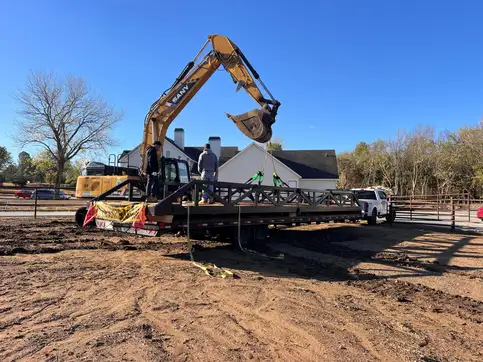
Freight on a bridge behaves nothing like freight on a pallet. It is priced off the shape of the load and the difficulty of the destination as much as off the distance, and the item that catches people out is almost never the mileage.
What goes into the number
How it ships. A flat-packed kit is a crate. An assembled span is an oversize load on a flatbed, and those are different vehicles with different rules. Assembled spans over 48 ft travel on two trucks and are bolted together on site before a crane sets them.
Dimensions and weight. Length drives it hardest, because past a certain length a shipment stops being ordinary freight and starts needing permits and sometimes escorts.
Distance, and the road. Not straight-line distance. The route an oversize load is permitted to take, which is not always the route a car would take.
The destination. A commercial yard with a dock and a forklift is the easy case. A residential address, a farm gate, a job site with no hard standing, or anywhere a tractor-trailer cannot turn around is a different price, and this is the single most common surprise on a bridge delivery.
Access at the end. Whether the truck can get within reach of the crossing, or has to stop somewhere else and leave you a second problem.
Season and site. A track that is fine in August and impassable in March is a scheduling question with a cost attached.
What is not included
Unloading. That is worth stating plainly because it is assumed more often than any other part of the process.
An assembled span arrives on a flatbed and something on your end has to lift it off, sized for the span. On most jobs that is an excavator or a crane, and it has to be there when the truck arrives rather than the following week. A driver waiting is a cost, and a driver leaving is a much larger one.
A flat-packed kit is the exception that makes kits attractive on hard sites: it comes off with much smaller equipment, and it assembles in place.
Why there is no calculator on this page yet
Roadrunner has not published crate dimensions, shipping weights, or freight classes per model, and this site will not print a freight figure it cannot stand behind. A number that looks like a quote and is not is worse than no number.
So freight is quoted per shipment for now. Anything oversize, remote, limited-access, or crane-dependent would route to a person for review even with a calculator in place, which is most bridge deliveries.
What to tell us
The delivery ZIP, what the last quarter mile is like, whether a tractor-trailer can turn around, and what equipment you have or can get to take the span off the truck. Those four answers get you a realistic figure faster than anything else.
What you need on delivery day
Make sure the delivery location is accessible to a full-size freight truck and that your unloading equipment is onsite and ready.
- Clear truck access
The delivery location must be accessible to a full-size commercial freight truck. Check for narrow entrances, low branches, soft ground, tight turns, gates, and overhead obstructions.
- Proper unloading equipment
Have a forklift, telehandler, skid steer with forks, or other properly rated equipment ready to unload the shipment. The freight driver is not responsible for unloading the bridge kit.
- An onsite contact
Someone must be present to receive the shipment, inspect it, and sign the delivery paperwork.
- A clear staging area
Choose a level, open area where the bridge kit can be safely unloaded and stored until installation.
- Your delivery paperwork
Review the shipment before signing. Note any visible damage on the delivery receipt and take photos before the driver leaves.
What can add to the freight cost
Limited-access locations, residential delivery, liftgate service, redelivery, or unusual site conditions may result in additional freight charges.
Related questions
How is bridge freight calculated?
Freight depends on crate dimensions and weight, freight class, origin, destination, and site access. Residential delivery, limited access, liftgate, and crane requirements all change it. We return a preliminary range rather than a single number, then confirm it manually before anything is binding.
Can you ship a bridge to my property?
Yes. Bridges ship by freight to the delivery address, including rural and private property. Fully assembled spans arrive on a truck ready to set. Kits ship flat. What matters is whether the truck can physically reach the site and what equipment is waiting when it does.
What equipment do I need to unload a bridge?
Fully assembled utility spans are set with a single crane pick, so you need a crane or excavator sized for the span and a clear approach. Bolt-together kits ship flat and are handled without a crane. We confirm the requirement for your specific model before delivery.
Related bridge systems
-
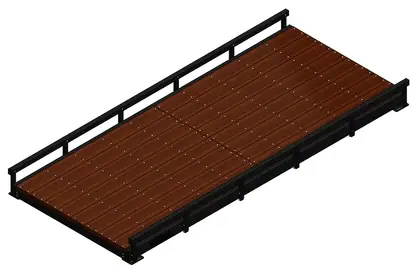
Bridge Kits
8,000 lbShips flat. Bolts together on site. No crane.
- Span
- 20 to 30 ft
- Width
- 8 and 10 ft
-
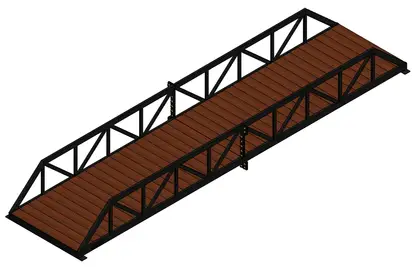
Utility Bridges
16,000 lb8-ton vehicular spans, delivered assembled and set on prepared abutments.
- Span
- 20 to 72 ft
- Width
- 6, 8 and 10 ft
-
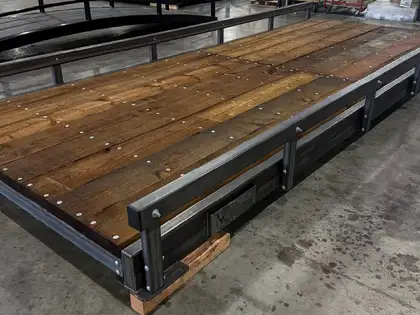
Cowboy Bridges
8,000 lbBuilt to cross. Finished by time.
- Span
- 20 ft
- Width
- 8 and 10 ft
Ready to put numbers on it?
The configurator asks seven questions about the span and the load and tells you which families fit and which do not. An engineer reads what it produces.