Application
Golf course bridges
Course superintendents, club managers, and the architects and contractors working on renovations.
- Published spans
- 20 to 72 ft
- Widths
- 6, 8 and 10 ft
- Rated
- 16,000 lb

Which bridge a golf course crossing usually needs
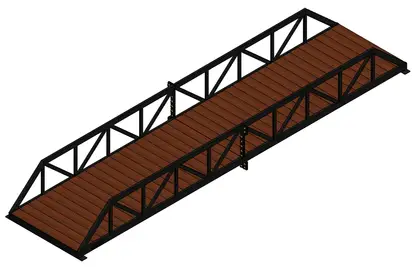
Also worth a look: Bridge Kits.
The bridge is part of the course
A crossing on a golf course has two jobs that pull in different directions. It has to carry the maintenance fleet, which is heavier than anything a member will ever drive, and it has to look like it belongs on a course that people pay to walk around.
The Utility Truss family covers the first. Twenty to seventy-two feet, eight and ten feet wide, rated 8 ton across every model, which takes a cart, a utility vehicle, a fairway mower, a topdresser, and the truck that shows up after a storm.
Size for the mower, not the cart
This is the mistake worth naming, because it is specific to courses.
The traffic everyone pictures is carts, and carts are light: 1,500 to 4,000 lb loaded. The traffic that actually governs is the maintenance fleet, and a fairway mower or a loaded topdresser is in a different category entirely. A crossing built around cart weight is a crossing the grounds crew has to drive around.
Ten feet of width is the other one. Two carts passing, or a mower crossing without someone walking ahead of it, is the difference between a crossing that gets used and one that becomes a queue on a Saturday.
Working in the window
Course construction happens when play allows: between seasons, during a renovation, or overnight. That is the strongest argument for a prefabricated span here.
The bridge is built in a shop while the course is open, arrives assembled on a flatbed, and is set from the bank in about a day once the abutments are ready. What takes time is the foundation work, and that can be scheduled and cured before the delivery is booked.
Spans over 48 ft arrive on two trucks and are bolted together on site before a crane sets them, which is worth knowing when you are planning where to stage equipment on a live course.
What decides the abutments
Rarely the bank. On most courses it is what is already buried near the crossing: irrigation mains, drainage, cart path base, and power to the far side. Photographs of both banks and a note on what runs through there is usually enough to start.
Crossings like these
Finished crossings in this kind of setting. Each shows one bridge in one configuration, and none of them is a rating or a promise about yours.
-

A kit over a golf course creek, red earth behind. -

Red rock on the skyline. Location not on record. -

A course maintenance vehicle, last run of the day. -

Open water and autumn cottonwoods.
Worth settling before you order
- Size for the mower fleet, not the carts. A cart is 1,500 to 4,000 lb loaded and a fairway mower or a topdresser is several times that, so the maintenance equipment is what decides the rating on almost every course.
- Ten feet of width lets two carts pass and lets a mower cross without a spotter. Eight feet works where the crossing is one-way or the traffic is light, and it is the dimension people most often wish they had gone up on.
- A crossing on a course is looked at by everyone who plays past it, which is not true of a service road. Powder coat black is standard and the finish is doing aesthetic work here as well as protective work.
- Course work happens in a window. Between seasons, during a renovation, or overnight, and a span that arrives assembled and sets in about a day fits that window in a way a poured structure does not.
- Cart paths and irrigation run close to most crossings. Where the abutments go is usually decided by what is already buried there rather than by the bank.
Questions that come up
What size bridge do I need?
Measure the crossing bank to bank, then add bearing length at each end. Standard spans run 20 to 72 feet. Width follows what crosses it: 4 feet for foot traffic, 8 feet for a single vehicle, 10 feet for two-way cart traffic or maintenance trucks.
How much weight can a steel bridge hold?
It depends on the family and the configuration. Utility Truss models are rated 8 ton, or 16,000 pounds. Bolt-together kits are rated 4 ton. Pedestrian models are rated 90 PSF as a distributed load. Final capacity for your site comes from the engineered configuration, not a catalog number.
How long does bridge installation take?
A set is often completed in about a day once the site is prepared and access is in place. The catalog puts installation at two to three weeks including pre-construction coordination, delivery, setting sections on abutments, and a final walkdown with you. Site prep is the variable.
What equipment do I need to unload a bridge?
Fully assembled utility spans are set with a single crane pick, so you need a crane or excavator sized for the span and a clear approach. Bolt-together kits ship flat and are handled without a crane. We confirm the requirement for your specific model before delivery.
Guides for this crossing
-
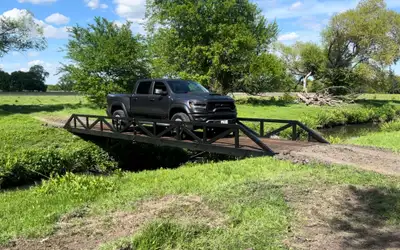 Engineering
What bridge load ratings mean
Roadrunner publishes two kinds of rating and they are not comparable. This is what each one describes, what the configurator sizes your answer against, and why a photograph of a machine on a bridge is not permission.
3 min read
-
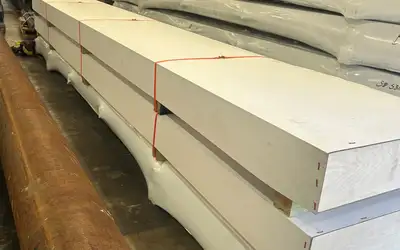 Installation
Assembled bridge or bridge kit
This is not really a preference. Site access and span decide it, and on most crossings only one of the two is available.
2 min read
-
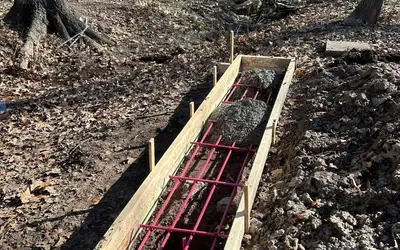 Installation
Abutments, bearing, and when you need concrete
The most common question about a prefabricated bridge is whether it needs concrete. The answer is that it depends on the bank, and this is what the answer depends on.
2 min read
Start with your crossing
Seven questions about the span and what has to get over it, and you get the families that fit and the ones that do not. Or send it to us and an engineer will read it.