Bridge engineering and documentation
Every bridge is engineered before it is fabricated, and the drawings are stamped and sealed for the jurisdiction it is going into when you need them to be. This is what that means in practice, and what we will and will not put in writing.
- Design basis
- AASHTO LRFD
- Design life
- 65 years
- Origin
- Made in USA
The design basis
Roadrunner bridges are engineered to AASHTO LRFD, the design specification used for highway and pedestrian structures in the United States. That is a design basis rather than a certification: it says what the structure was designed against, and it is the thing an engineer reviewing a submittal will want named.
The published design life is 65 years, stated for a powder-coated bridge. On a raw steel Cowboy it is the same, on the condition that the bridge is painted or coated as Roadrunner recommends.
Who builds it
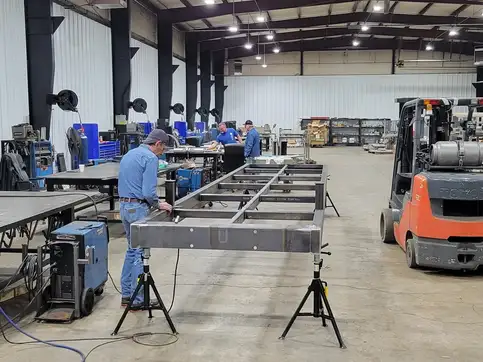
Fabrication is done in-house and with partner shops. Every bridge is made in the USA, which matters on public work where the funding carries a domestic sourcing condition.
What you can ask for
None of this is behind a download wall, and none of it is on this page as a PDF either. Ask and it is sent.
-
Stamped and sealed drawings
Sealed for the project jurisdiction, on request. Tell us which state the crossing is in when you ask, because that is what decides who seals it.
-
Load ratings and the configuration behind them
Every published figure is stated for the span, width, deck and rail it was engineered with. The rating without its configuration is not a specification.
-
Submittal support
For public work, the package a procurement process needs: vendor setup, a W-9, and the documentation a submittal asks for.
-
A conversation with the engineer
For anything outside the published families, which is most crossings above 8 ton, this is the first step rather than a last resort.
Load guidance
The published families are rated 8 ton and lighter. A rating in tons describes a vehicle; a rating in PSF describes a uniform distributed load for people. They are different measurements and neither converts into the other.
Above the published range, and for anything where the loading is unusual rather than simply heavy, the span is engineered against the actual load instead of selected from a table. That is a conversation worth having early, because the answer changes the foundations as much as the bridge.
A rating is not an engineering approval
- Published ratings apply to the cataloged configuration, in the deck and rail it was engineered with.
- What your crossing will carry depends on the engineered configuration for your site, which is settled during design.
- Nothing on this page, and nothing the configurator produces, is an engineering approval for a specific site.
Talk with engineering
Send the span, what has to cross it, photographs of both banks, and the jurisdiction. An engineer reads it before anyone talks about price.