Application
Bridges for data center campuses
Data center campuses are crossed by duct banks, utility trenches, drainage channels and detention ponds, and the people and service vehicles that keep a site running have to get across them. Roadrunner builds prefabricated steel bridges for those crossings in Greenville, Texas, and delivers them ready to set.
- Published spans
- 20 to 72 ft
- Widths
- 6, 8 and 10 ft
- Rated
- 90 PSF / 16,000 lb
Where this usually lands
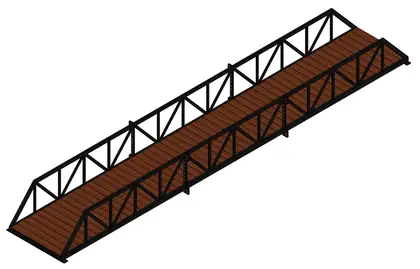
- Pedestrian Bridges Nine models from 40 to 72 feet, in 8 and 10 foot widths, rated 90 PSF and engineered to the AASHTO LRFD Guide Specifications for the Design of Pedestrian Bridges. ADA-oriented horizontal railing is available.
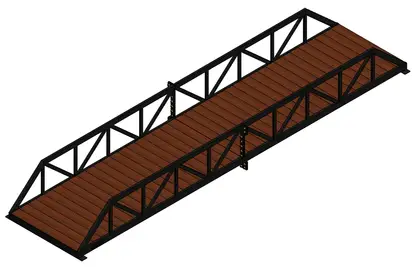
- Utility Bridges Twenty-six models from 20 to 72 feet, in 6, 8 and 10 foot widths. Every model is rated 8 ton. Arrives assembled and ready to set on prepared abutments, which is what makes a one-day set realistic on an accessible site. Spans over 48 feet ship on two trucks and are bolted together on site before the set.
Also worth a look: Bridge Kits.
Commercial and industrial sites: no cataloged family covers that loading. Those crossings are engineered against the actual loading rather than selected from a size table, which is an engineering conversation and worth starting early.
Where they go
- Pedestrian links between buildings, parking and site amenities
- Crossings over utility trenches, duct banks and drainage swales
- Maintenance and service-vehicle access
- Detention pond and creek crossings on perimeter and trail routes
Ratings, and when to engineer
Standard Pedestrian models are rated to the AASHTO LRFD pedestrian guide specification (90 PSF). Standard Utility Truss models carry 16,000 lb (8 tons) across 20 to 72 ft spans in 6, 8 and 10 ft widths. Crossings that must carry heavier equipment or trucks are engineered to the actual loading instead of picked from the table, so start that conversation early in design.
Built for a general contractor’s schedule
- Stamped drawings and submittals for your review.
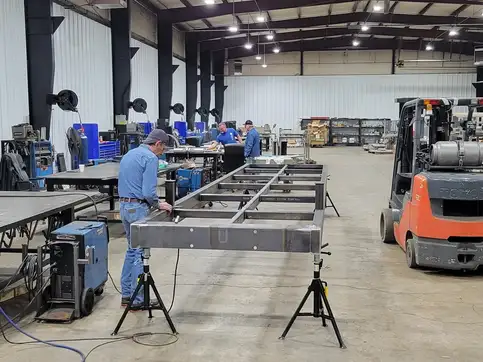
- Shop-built and inspected before it ships.
- Delivered assembled and ready to set on prepared abutments, so a one-day set is realistic on an accessible site. Spans over 48 ft ship on two trucks and are bolted together on site before the set.
- Vendor setup with W-9, certificate of insurance and prequalification documents on request.
- Part of The Henry Group (opens in a new tab), which also fabricates platforms, catwalks and equipment supports and installs them with its own crews.
Questions that come up
Can you provide stamped engineering drawings?
Yes. Designs are stamped and sealed for the project jurisdiction, ready for plan review and permit. Pedestrian models are engineered to the AASHTO LRFD Guide Specifications for the Design of Pedestrian Bridges. Tell us the jurisdiction early, because it shapes the design rather than getting added at the end.
How much weight can a steel bridge hold?
It depends on the family and the configuration. Utility Truss models are rated 8 ton, or 16,000 pounds. Bolt-together kits are rated 4 ton. Pedestrian models are rated 90 PSF as a distributed load. Final capacity for your site comes from the engineered configuration, not a catalog number.
How long does bridge installation take?
A set is often completed in about a day once the site is prepared and access is in place. The catalog puts installation at two to three weeks including pre-construction coordination, delivery, setting sections on abutments, and a final walkdown with you. Site prep is the variable.
What equipment do I need to unload a bridge?
Fully assembled utility spans are set with a single crane pick, so you need a crane or excavator sized for the span and a clear approach. Bolt-together kits ship flat and are handled without a crane. We confirm the requirement for your specific model before delivery.
Start with your crossing
Send the span, width, load and site access, and we'll recommend a model or start the engineering.