Installation
Abutments, bearing, and when you need concrete
The most common question about a prefabricated bridge is whether it needs concrete. The answer is that it depends on the bank, and this is what the answer depends on.
2 min read Updated August 6, 2026
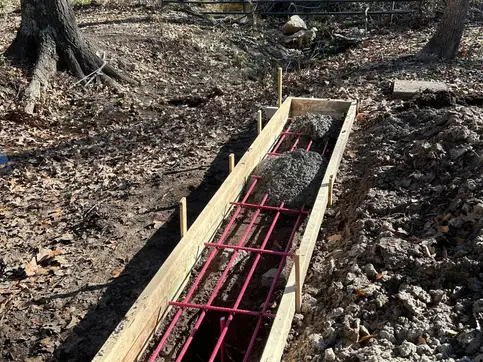
Concrete foundations are recommended for many applications and may not always be required. That sentence is deliberately not a yes or a no, and it is worth explaining why rather than leaving it as a hedge.
What the bridge is actually doing
A prefabricated span carries its load to two points and puts it into the ground there. Whatever is at those two points has to do three things: hold the weight without settling, stay where it is when the water rises, and not wash out from underneath.
Concrete is the most reliable way to do all three. It is not the only way, and on some sites it is not the appropriate one.
Bearing
The span needs somewhere flat, level and solid to land, and enough of it. Bearing length is part of the span you order, which is why the buying guide asks you to measure bank to bank and then add at each end rather than measuring the gap.
Too little bearing concentrates load at the very edge of whatever the bridge is sitting on, which is the worst possible place to put it.
What the bank decides
Rock, at or near the surface. Often the easiest case. There may be very little to build, and the work is leveling and seating rather than founding.
Firm, well-drained soil above the flood line. A poured concrete abutment is the usual answer, and it is what most of these crossings get.
Soft ground, or a bank that has already washed out once. The bank is the problem rather than the bridge, and a span dropped on a bank that failed before will fail with it. This is the case where approach work, armouring, and sometimes a deeper foundation cost more than the bridge does.
A bank that floods. Where the water goes when it rises decides the abutment, the approach grade, and sometimes the span itself. A crossing sized to the summer creek is sized to the wrong creek.
Why photographs matter more than descriptions
Almost every foundation question is answered faster by two photographs than by a paragraph. Stand back far enough to show both banks and the approach on each side, and include something for scale.
Whether the site has been flooded before, and how high it got, is the other thing worth saying without being asked. It is the fact most likely to change the design and the one least likely to be in a set of measurements.
What Roadrunner does and does not supply
Roadrunner manufactures and delivers the bridge, and drawings are stamped and sealed for the project jurisdiction on request. Abutments, approach grading, and the site work around them are normally the owner’s or the contractor’s, and the design of them belongs to whoever is stamping the foundation.
Send the photographs early. The foundation conversation is the one that most often changes the schedule, and it is much cheaper to have before fabrication than after delivery.
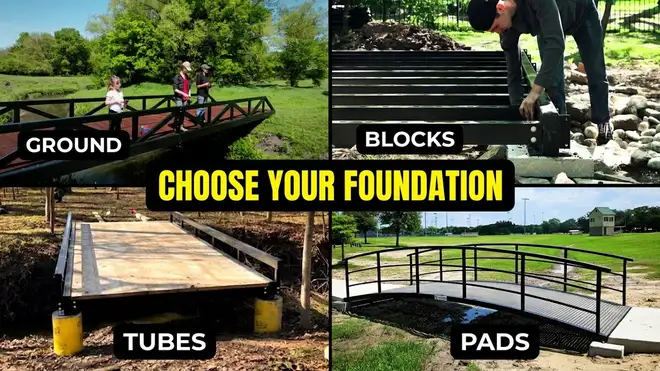
Watch it happen
Related questions
Can I install a bridge without concrete?
Often, yes. Concrete foundations are recommended for many applications and may not always be required. What your crossing needs depends on soil, bank geometry, and the load crossing it. That gets settled during the site evaluation, when someone walks the location with you before anything is fabricated.
Does a pedestrian bridge need a concrete foundation?
Usually it needs prepared abutments, and concrete is recommended for many applications though it may not always be required. Longer pedestrian spans put real load into each bearing point, so the abutment design is part of the stamped engineering package rather than something decided on site.
What size bridge do I need?
Measure the crossing bank to bank, then add bearing length at each end. Standard spans run 20 to 72 feet. Width follows what crosses it: 4 feet for foot traffic, 8 feet for a single vehicle, 10 feet for two-way cart traffic or maintenance trucks.
Related bridge systems
-
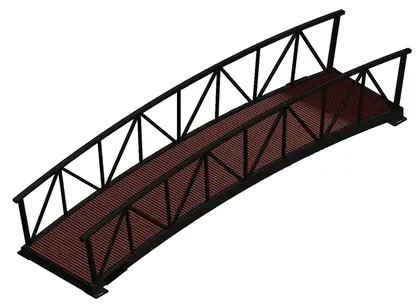
Trail Bridges
60 PSFNarrow, light, and disappears into the landscape.
- Span
- 16 to 36 ft
- Width
- 4 and 8 ft
-
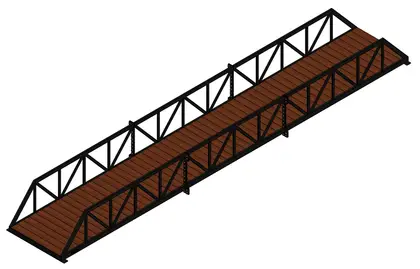
Pedestrian Bridges
90 PSFLong-span crossings for parks, greenways, resorts, and campuses.
- Span
- 40 to 72 ft
- Width
- 8 and 10 ft
-
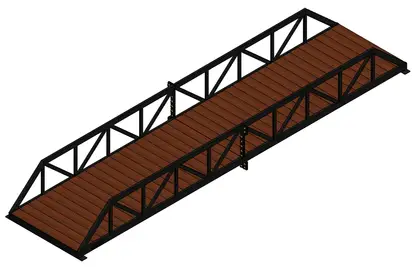
Utility Bridges
16,000 lb8-ton vehicular spans, delivered assembled and set on prepared abutments.
- Span
- 20 to 72 ft
- Width
- 6, 8 and 10 ft
In the field
Case studies
-
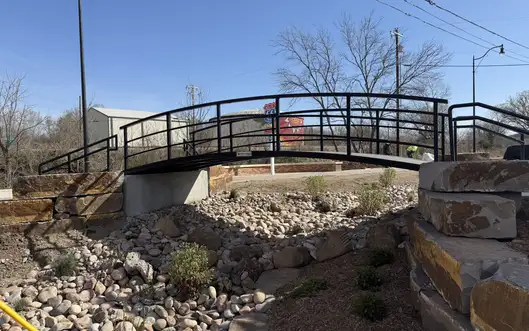 Sapulpa, Oklahoma · 2026
Preserving a Route 66 landmark in Sapulpa, Oklahoma
7 ft wide, 20 ft span
A new crossing that could carry public access through the park without competing with the landmark the park exists for. It had to sit naturally in the site, stay out of the way of a structure that has stood for nearly a century, and not read as an afterthought placed beside a piece of history.
-
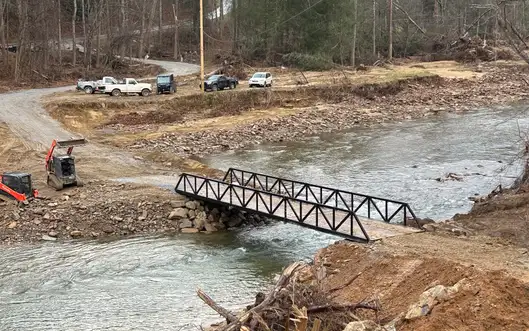 Poga, Tennessee · 2025
Reconnecting Poga after Hurricane Helene
10 ft wide, 56 ft span
Hurricane Helene flooding took out Poga Bridge 2. The crossing it carried was the way people reached homes, neighbors, supplies and emergency services, and without it a small community was split in two.
Ready to put numbers on it?
The configurator asks seven questions about the span and the load and tells you which families fit and which do not. An engineer reads what it produces.