Steel bridge photo gallery
Bridges we have built, in the places they were built for. These are photographs of real crossings rather than renders, which is why some of them have flood debris and an excavator in the frame.
A photograph shows one bridge in one configuration. It is not a specification, and what your crossing will carry is settled in the engineered configuration for your site.
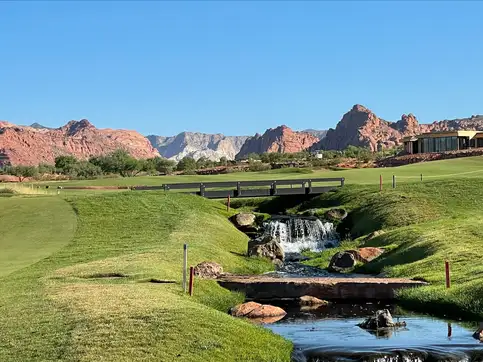
In service
Bridges being used for what they were bought for. The machine crossing is named; the bridge under it is not, because the model and configuration in these frames are not on record.
-
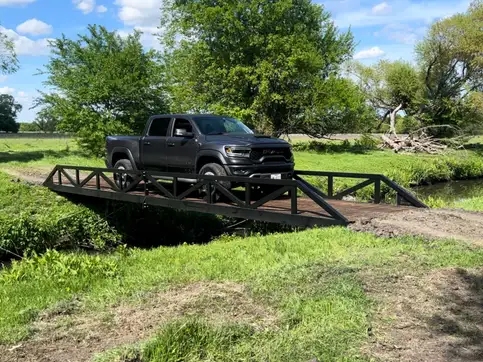
A pickup stopped partway across. -
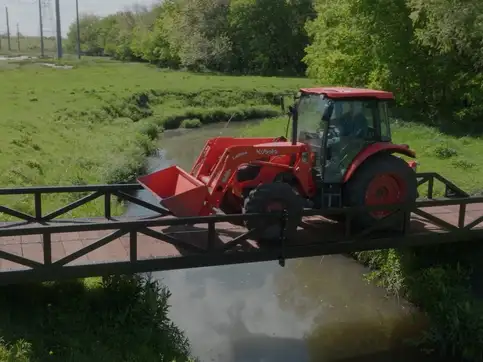
A tractor and front loader, over a pond. -
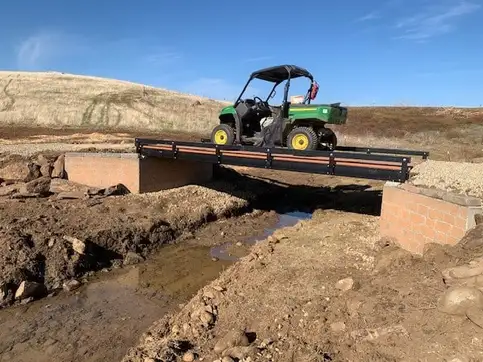
A UTV on a kit, with the excavation still open. -
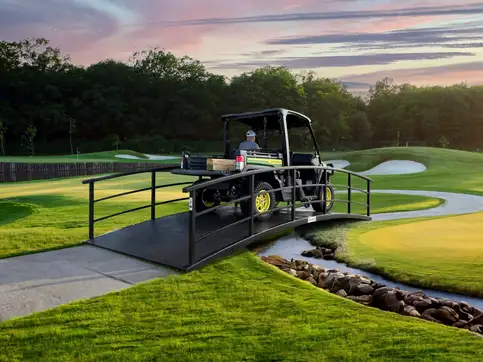
A course maintenance vehicle, last run of the day.
Where they end up
Finished crossings, in the country they were built for. Two of these are a long way from Texas and the record does not say where.
-
Red rock on the skyline. Location not on record. -
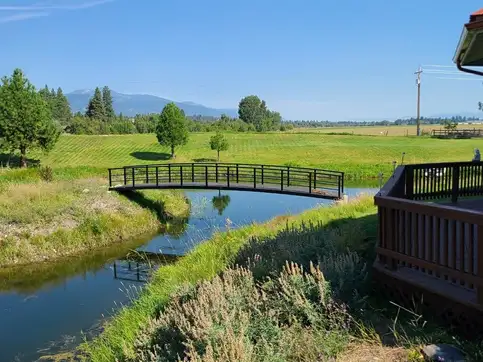
A pasture creek under mountains. -
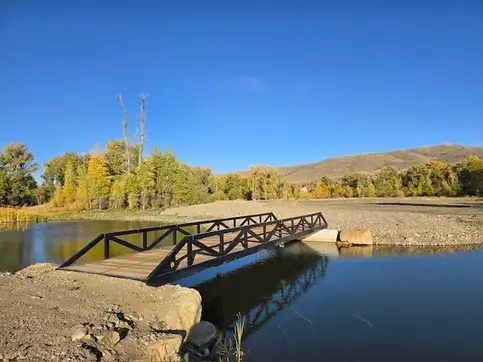
Open water and autumn cottonwoods. -
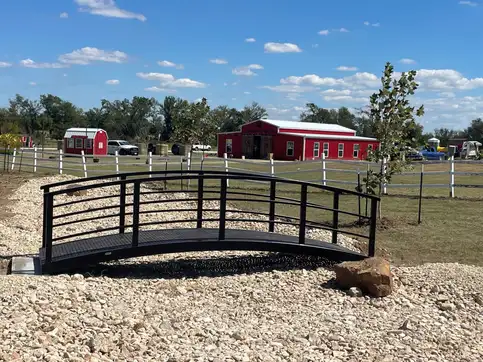
An arched span on a dry rock bed, barns behind. -
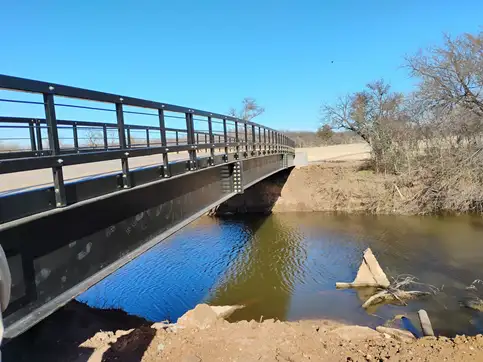
A long span in elevation, on poured abutments. -
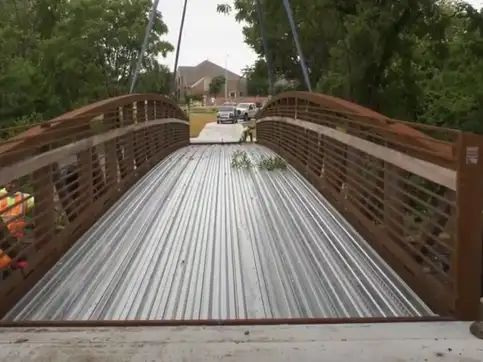
Crew on the deck at handover. -
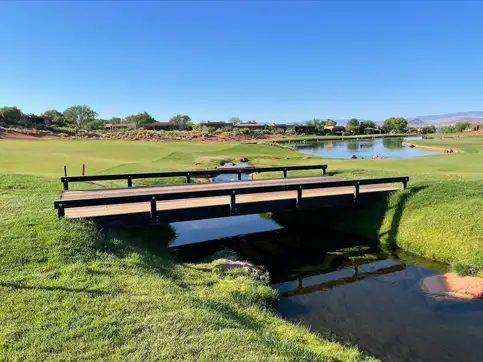
A kit over a golf course creek, red earth behind. -
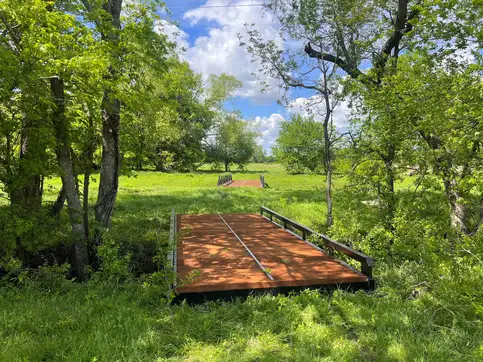
Two crossings on one property, in summer. -
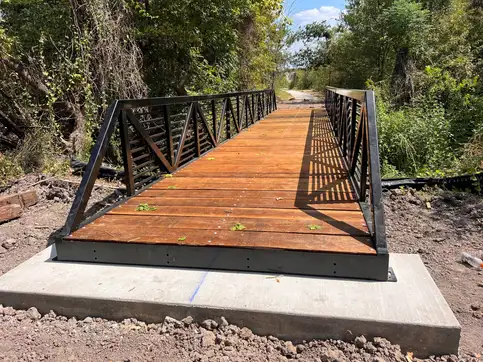
New, on its footing at the edge of the woods. -
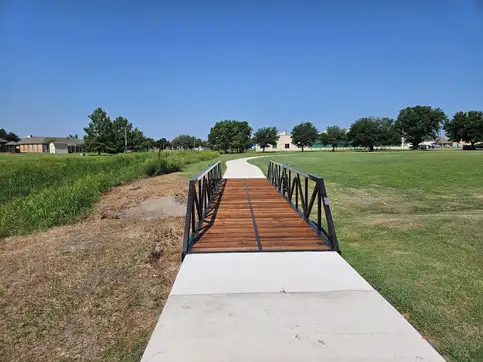
A park path, carried across a swale.
The Utility Truss, by name
Three frames whose filenames name the bridge. Everywhere else on this page a finished span is just a crossing, because the record does not say which family it is; these three it does.
-
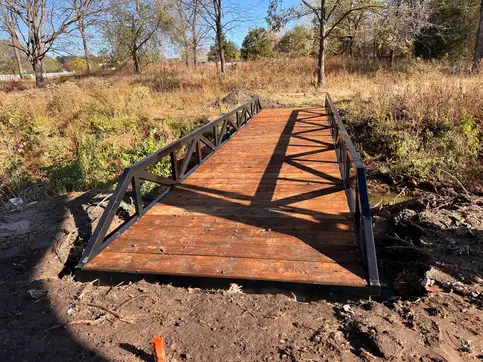
An 8 by 40 with a 24 inch truss, newly set. -
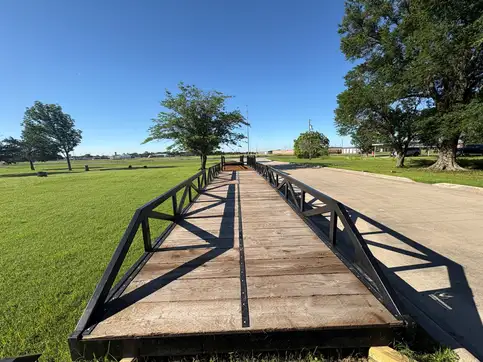
An 8 by 40, on blocks outside the shop. -
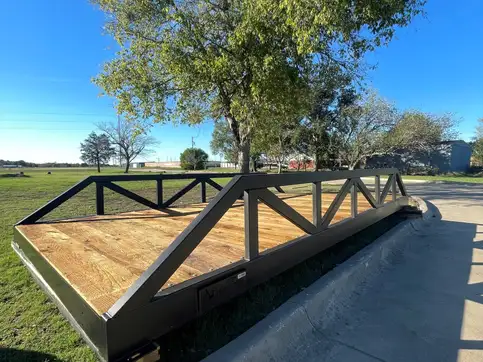
A 10 by 20. The cast plate reads 8 ton.
The Cowboy, in raw steel
The Kit without the powder-coat step. Until today the site said in writing that it had no photograph of a raw steel bridge; these are what it had instead. What none of them carries is a date, so they show what raw steel looks like and not how long it took.
-
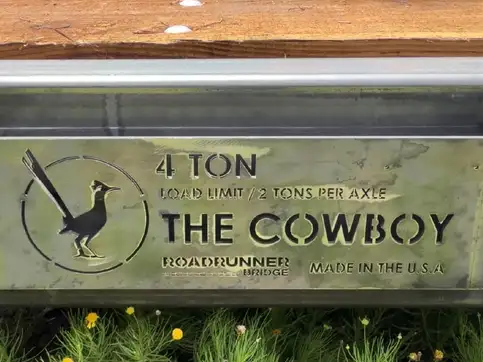
The cast plate on one Cowboy, weathered. -
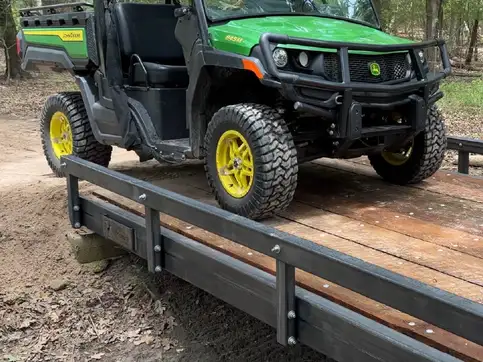
The same product working, out on a track. -
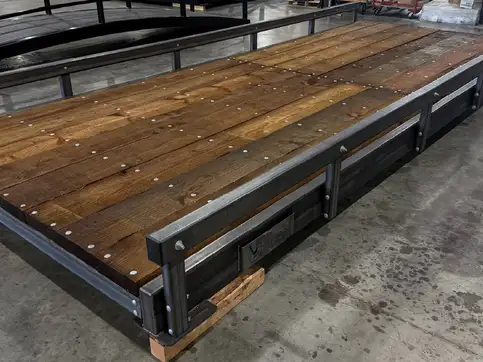
And one decked in the shop, before it has been outside. -
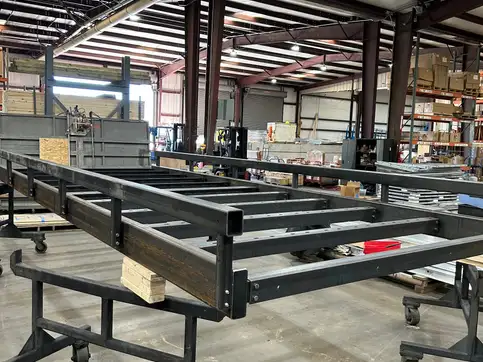
An uncoated frame with a bump rail. -
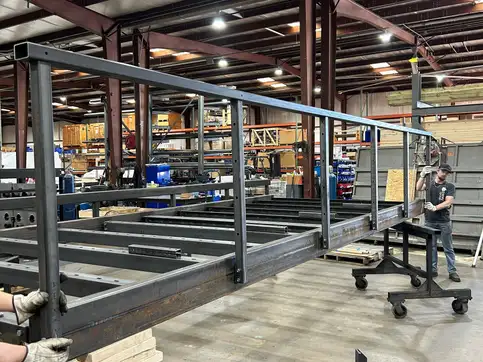
The same finish with a full handrail.
In the shop
Greenville, Texas. Everything on this page was cut, welded, coated and decked here before it went anywhere, including the two options the rest of the site names and has never been able to show you.
-
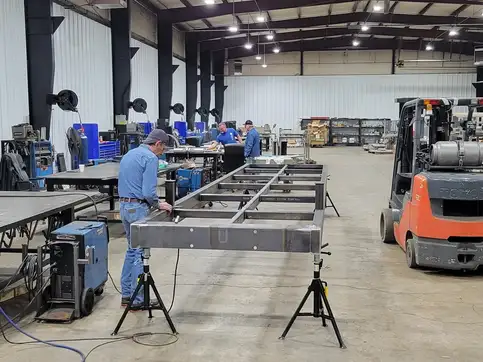
A frame under fabrication. -
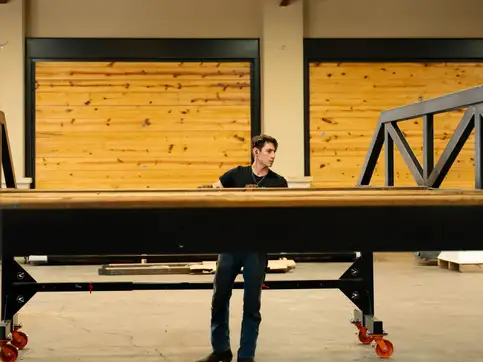
A span on stands, with someone under it for scale. -
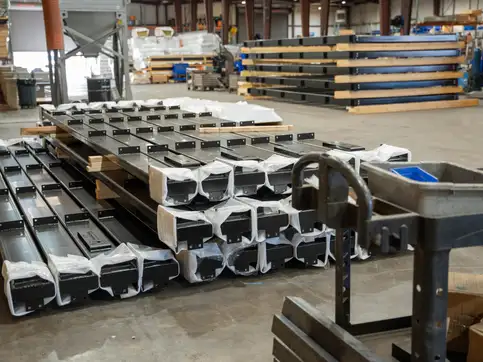
Steel and decking staged before assembly. -
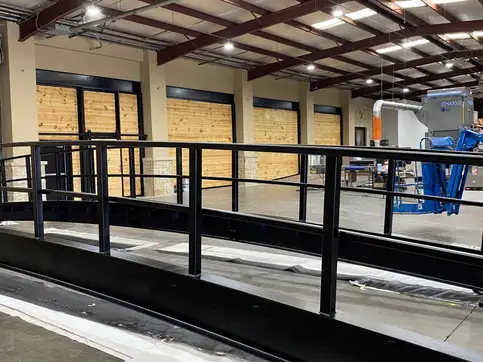
An arch, complete indoors. The camber is rolled into the beam. -
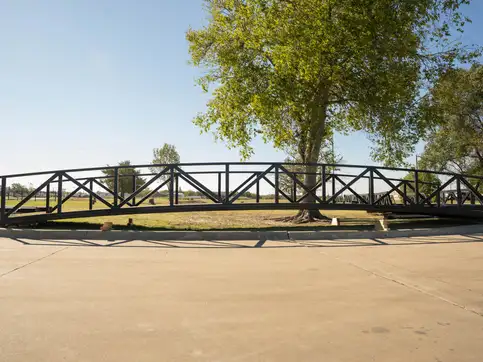
An arched truss span, finished, on blocks outside. -
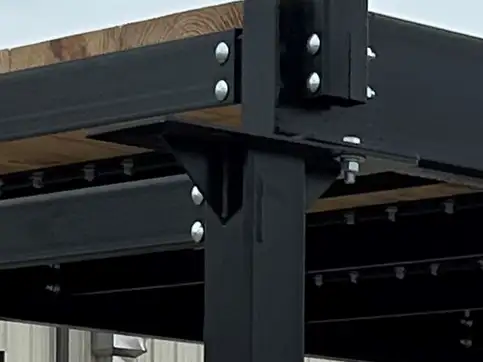
One bolted joint. This is what assembles on site. -
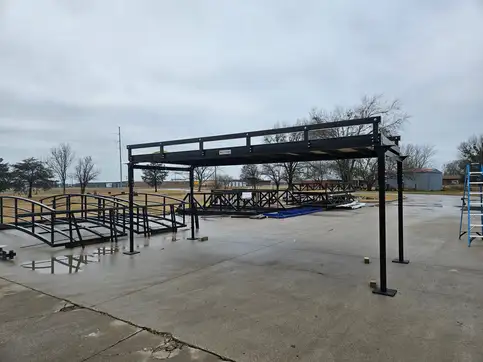
The adjustable leg kit, for uneven ground. -
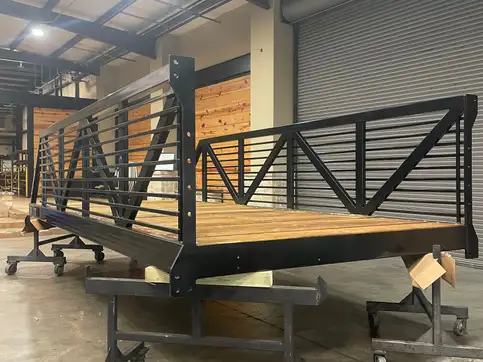
The ADA-oriented horizontal handrail. -
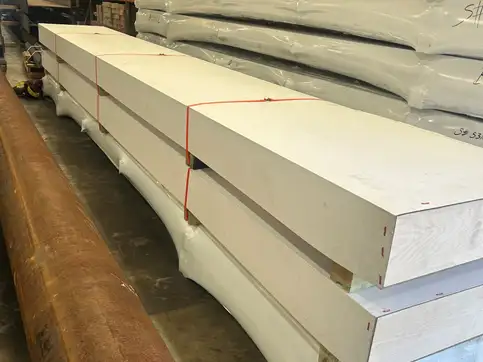
A kit banded flat for freight. -
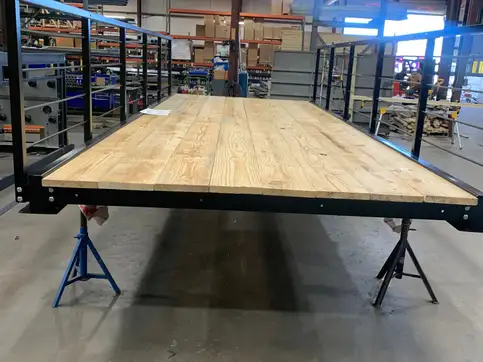
Or bolted up, coated and decked before it ships.
Going in
Site preparation through the set, in order, and the thing that decides all of it. Photographs of both banks are what the quote form asks for, and the last frame here is what it is asking about.
-
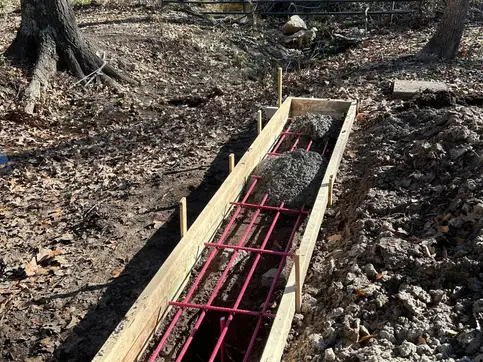
Abutment formwork and reinforcement, before the pour. -
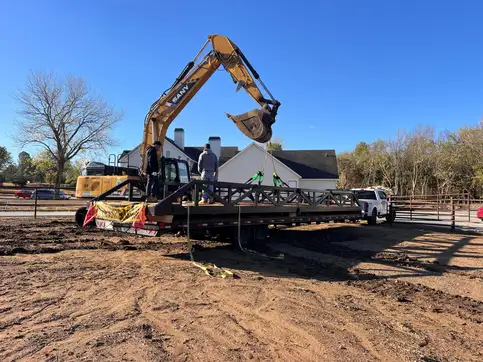
The span rigged off the trailer. -
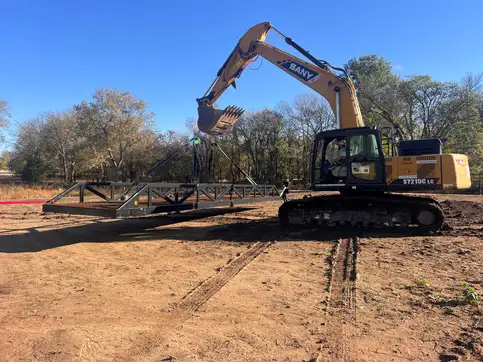
Carried on slings to the abutments. -
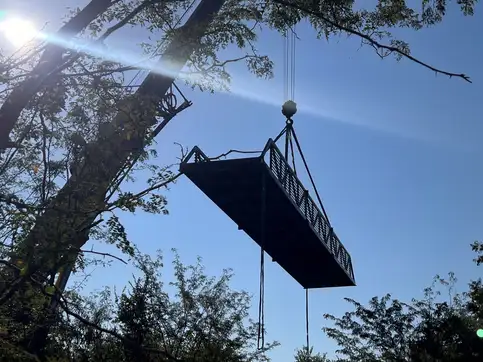
Or picked by crane, span in the air. -
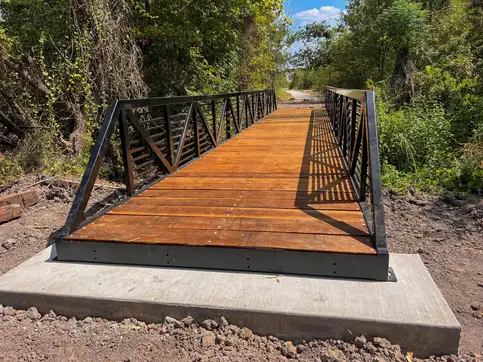
Seated, decked and railed. -
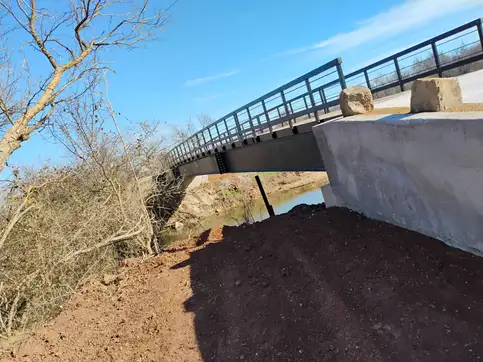
A finished abutment, close up.
Greenville, Texas
The Parks and Recreation crossing, a mile or so from the shop that built it.
-
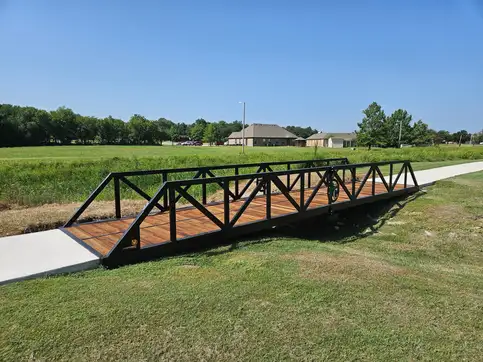
The span carrying the park path. -
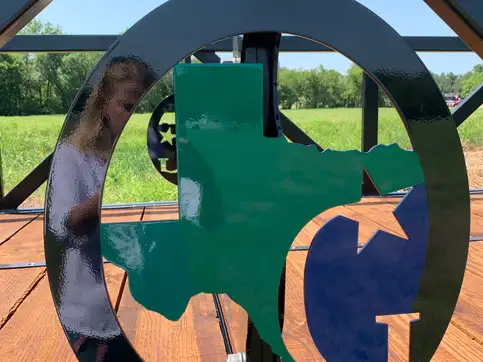
Their artwork, cut into the truss.
Sapulpa, Oklahoma
A new crossing that could carry public access through the park without competing with the landmark the park exists for. It had to sit naturally in the site, stay out of the way of a structure that has stood for nearly a century, and not read as an afterthought placed beside a piece of history.
-
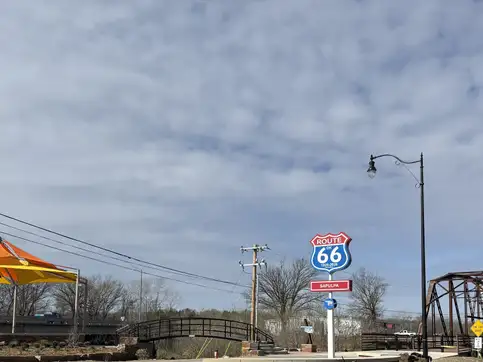
Two eras of bridge building, side by side. -
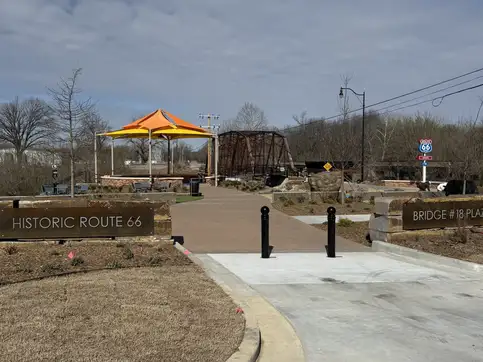
The park entrance and its signage. -
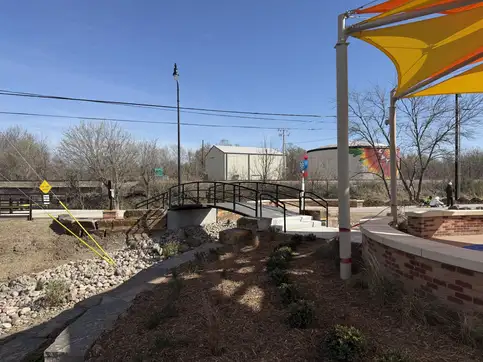
The crossing from the plaza side. -
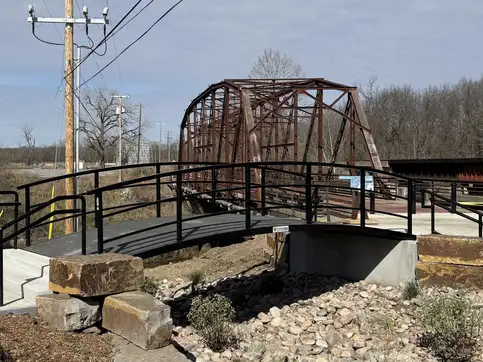
The new span, with Bridge 18 rising behind it.
Poga, Tennessee
Hurricane Helene flooding took out Poga Bridge 2. The crossing it carried was the way people reached homes, neighbors, supplies and emergency services, and without it a small community was split in two.
-
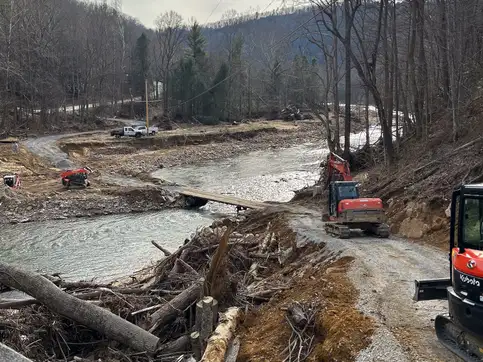
What the flooding left behind. -
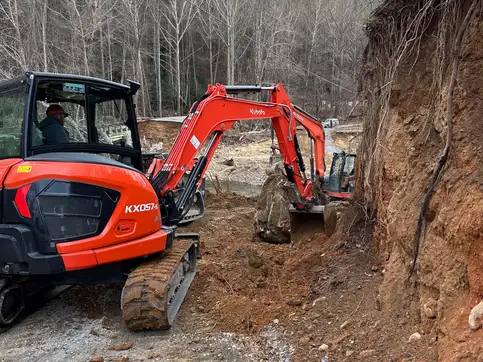
Cutting the approach back to grade. -
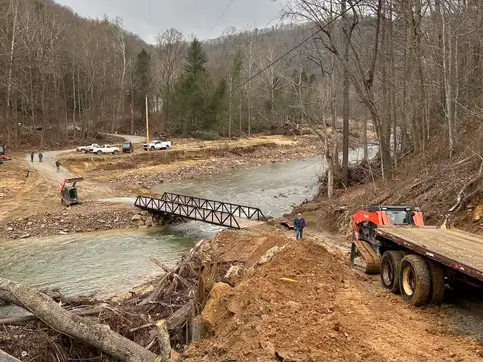
The delivery trailer on the new approach. -
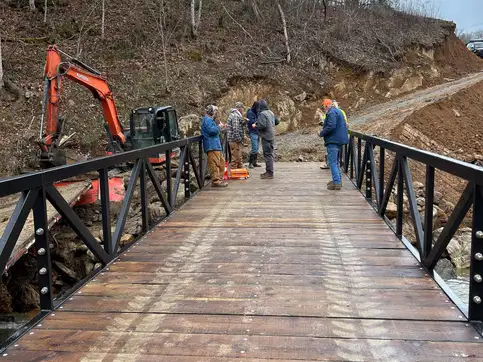
The finished deck, looking across to the far bank. -
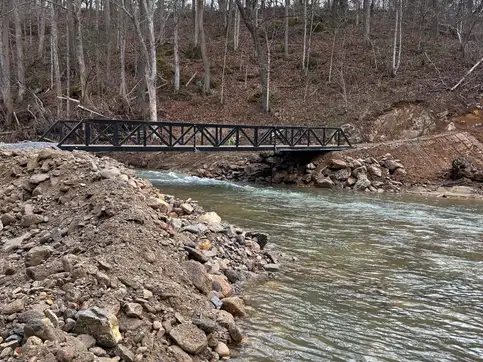
The span on its abutments. -
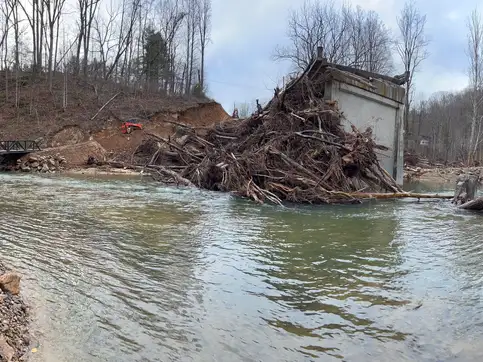
The old crossing's abutment in the debris, and the new span beyond it.
Yours would be the next one
Tell us the span, what has to get across it, and what the banks look like. Photographs of both sides are usually enough to start.