Application
Municipal and government bridges
Cities, counties, parks departments, school districts, and the engineers and contractors who bid their work.
- Published spans
- 20 to 72 ft
- Widths
- 6, 8 and 10 ft
- Rated
- 90 PSF / 16,000 lb
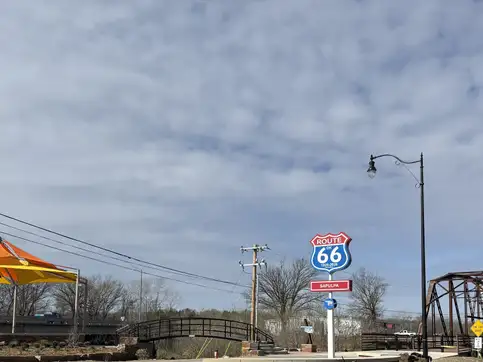
What city and county crossings usually call for
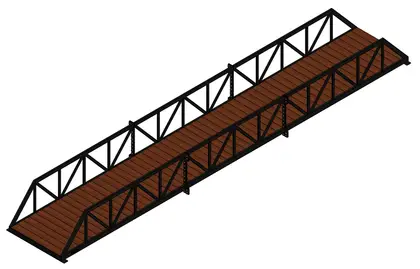
- Pedestrian Bridges Nine models from 40 to 72 feet, in 8 and 10 foot widths, rated 90 PSF and engineered to the AASHTO LRFD Guide Specifications for the Design of Pedestrian Bridges. ADA-oriented horizontal railing is available.
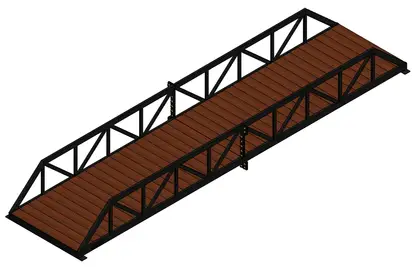
- Utility Bridges Twenty-six models from 20 to 72 feet, in 6, 8 and 10 foot widths. Every model is rated 8 ton. Arrives assembled and ready to set on prepared abutments, which is what makes a one-day set realistic on an accessible site. Spans over 48 feet ship on two trucks and are bolted together on site before the set.
Two things have to line up
A municipal crossing has an engineering answer and a procurement answer, and the project moves at the speed of whichever is further behind. The bridge itself is the straightforward half.
Roadrunner spans are engineered to AASHTO LRFD. Drawings are stamped and sealed for the project jurisdiction on request. Everything is made in the USA, which is frequently a condition of the funding rather than a preference.
Which family, and why
Public work usually lands in one of two places. The Pedestrian family spans 40 to 72 ft at 8 and 10 ft wide, rated 90 PSF, and covers a public walkway or a park crossing at length. The Utility Truss family spans 20 to 72 ft at the same widths, rated 8 ton, and covers anything a maintenance vehicle, a mower crew, or a service truck has to use.
The distinction is worth settling early because it is not really about the span. It is about whether a vehicle ever crosses, and on municipal property the honest answer is usually yes eventually.
Planning around the schedule
A public project is normally committed to a completion date before anyone has priced a bridge. The twelve-week figure above is the whole path from evaluation to installed, not the fabrication window, and the parts of it that move are site evaluation and design.
The set is often about a day once the site is prepared. Abutments, approach work, and crane access are what the surrounding schedule has to accommodate, and they belong in the contractor’s sequence rather than in ours.
What to send us
A location, a span, what has to cross it, and any load rating or width the jurisdiction has already specified. If a submittal package has a deadline, say so at the start.
Crossings like these
Finished crossings in this kind of setting. Each shows one bridge in one configuration, and none of them is a rating or a promise about yours.
-
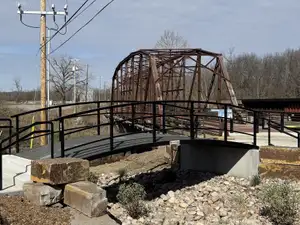
Sapulpa, Oklahoma: the new span and Bridge 18. -
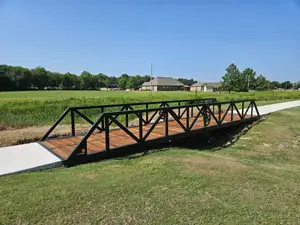
Greenville Parks and Recreation, in service. -
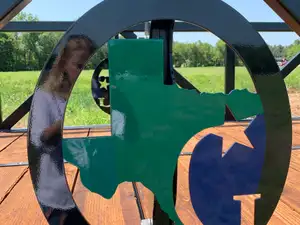
The city's artwork, cut into the truss. -
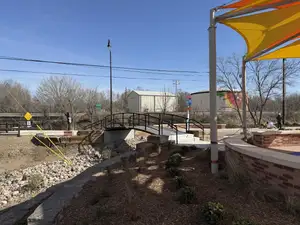
Sapulpa, Oklahoma: the crossing from the plaza side.
Worth settling before you order
- Procurement usually needs the paperwork before it needs the bridge. Vendor setup, a W-9, insurance certificates, and a submittal package are the path, and starting them alongside the design rather than after it saves weeks.
- Drawings are stamped and sealed for the project jurisdiction on request. Which states the engineer of record is licensed in is worth confirming for your jurisdiction specifically.
- Every bridge is fabricated in the USA, which matters where a funding source carries a domestic sourcing condition. Grant-funded work often does.
- A public crossing is used by people who did not choose it and cannot be asked to be careful. Railing, deck surface, approach grade, and sight lines deserve the same attention as the span.
- A twelve-week project timeline is realistic: about a week of site evaluation, one to three weeks of design, five to six weeks of fabrication, and two to three weeks of installation. Public schedules are usually set long before the bridge is ordered, so this is worth putting in the plan early.
In the field
Built for this
-
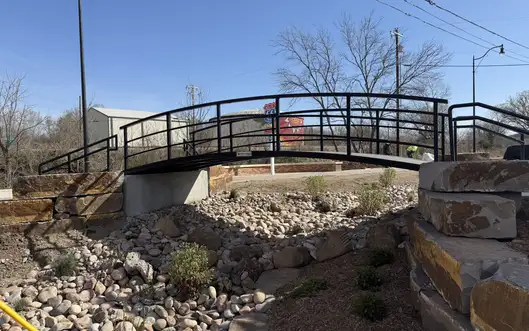 Sapulpa, Oklahoma · 2026
Preserving a Route 66 landmark in Sapulpa, Oklahoma
7 ft wide, 20 ft span
A new crossing that could carry public access through the park without competing with the landmark the park exists for. It had to sit naturally in the site, stay out of the way of a structure that has stood for nearly a century, and not read as an afterthought placed beside a piece of history.
-
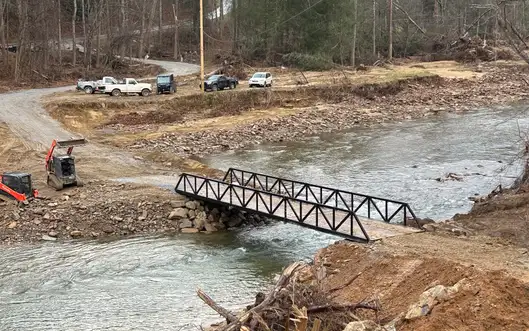 Poga, Tennessee · 2025
Reconnecting Poga after Hurricane Helene
10 ft wide, 56 ft span
Hurricane Helene flooding took out Poga Bridge 2. The crossing it carried was the way people reached homes, neighbors, supplies and emergency services, and without it a small community was split in two.
Questions that come up
Can you provide stamped engineering drawings?
Yes. Designs are stamped and sealed for the project jurisdiction, ready for plan review and permit. Pedestrian models are engineered to the AASHTO LRFD Guide Specifications for the Design of Pedestrian Bridges. Tell us the jurisdiction early, because it shapes the design rather than getting added at the end.
What size bridge do I need?
Measure the crossing bank to bank, then add bearing length at each end. Standard spans run 20 to 72 feet. Width follows what crosses it: 4 feet for foot traffic, 8 feet for a single vehicle, 10 feet for two-way cart traffic or maintenance trucks.
How long does bridge installation take?
A set is often completed in about a day once the site is prepared and access is in place. The catalog puts installation at two to three weeks including pre-construction coordination, delivery, setting sections on abutments, and a final walkdown with you. Site prep is the variable.
Does a pedestrian bridge need a concrete foundation?
Usually it needs prepared abutments, and concrete is recommended for many applications though it may not always be required. Longer pedestrian spans put real load into each bearing point, so the abutment design is part of the stamped engineering package rather than something decided on site.
Guides for this crossing
-
 Buying guide
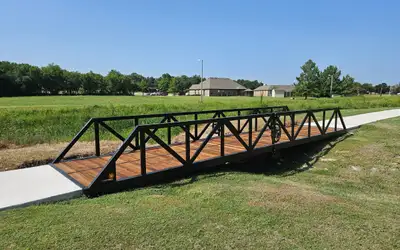
Planning a pedestrian bridge
What the path does on either side settles more of the specification than the gap does. The decisions in the order a design needs them, and what to ask whoever is quoting it.
7 min read
-
 Buying guide
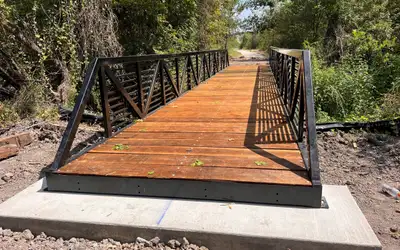
What to settle before you ask for a quote
Six things decide which bridge you end up with. Most of them you can answer standing at the crossing, and answering them first is the difference between a quote in a day and a fortnight of email.
2 min read
-
 Installation
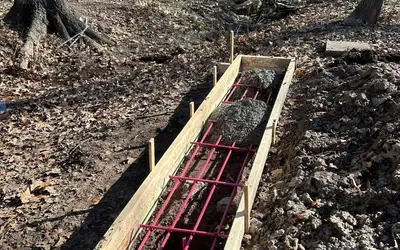
Abutments, bearing, and when you need concrete
The most common question about a prefabricated bridge is whether it needs concrete. The answer is that it depends on the bank, and this is what the answer depends on.
2 min read
Start with your crossing
Seven questions about the span and what has to get over it, and you get the families that fit and the ones that do not. Or send it to us and an engineer will read it.