Freight and delivery
A bridge is oversize, heavy, and going somewhere a truck was not designed to reach. Freight is quoted per shipment rather than from a table, and the fastest way to a real number is four answers about your end.
Getting a freight number
There is no calculator on this page, and that is deliberate. Roadrunner has not published crate dimensions or freight classes per model, and a figure that looks like a quote and is not is worse than no figure at all.
So freight is quoted per shipment and included with your bridge quote before an order is confirmed. Send these four and it is quick.
-
The delivery ZIP
Where the bridge is actually going, not the billing address. Those differ more often than you would think on rural property.
-
What the last quarter mile is like
Gates, turning room, low limbs, soft ground, and whether a full-size tractor-trailer can get in and back out again.
-
What is waiting to unload it
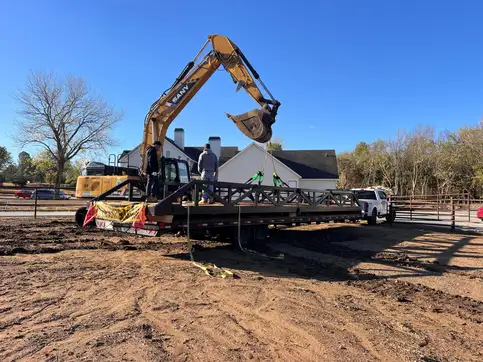
A forklift, a telehandler, a skid steer with forks, an excavator, or nothing yet. This is the answer that changes the plan most often.
-
When you need it
Especially if a date is already committed, or if the site is only reachable in some seasons.
How shipping works
- 1 Request your freight quote
Send us your delivery ZIP code and project details. We will calculate the freight cost and include it with your complete bridge quote.
- 2 Approve your order
Once you review and approve the bridge and freight pricing, we will confirm your order and provide an estimated production and shipping timeline.
- 3 Schedule delivery
When your bridge is ready to ship, our team or the freight carrier will contact you to coordinate the delivery date. Someone must be available at the delivery location to receive and unload the shipment.
- 4 Unload your bridge kit
The bridge arrives on a commercial freight truck. Customers are responsible for providing suitable equipment to unload it, such as a forklift, telehandler, skid steer with forks, or other properly rated equipment.
An assembled span travels as an oversize load on a flatbed. Spans over 48 ft ship on two trucks and are bolted together on site before a crane sets them. A flat-packed kit ships as a crate, comes off with much smaller equipment, and is the format that makes an awkward site possible at all.
What you need on delivery day
Make sure the delivery location is accessible to a full-size freight truck and that your unloading equipment is onsite and ready.
-
Clear truck access
The delivery location must be accessible to a full-size commercial freight truck. Check for narrow entrances, low branches, soft ground, tight turns, gates, and overhead obstructions.
-
Proper unloading equipment
Have a forklift, telehandler, skid steer with forks, or other properly rated equipment ready to unload the shipment. The freight driver is not responsible for unloading the bridge kit.
-
An onsite contact
Someone must be present to receive the shipment, inspect it, and sign the delivery paperwork.
-
A clear staging area
Choose a level, open area where the bridge kit can be safely unloaded and stored until installation.
-
Your delivery paperwork
Review the shipment before signing. Note any visible damage on the delivery receipt and take photos before the driver leaves.
What can add to the freight cost
Limited-access locations, residential delivery, liftgate service, redelivery, or unusual site conditions may result in additional freight charges.
Not sure a truck can reach you?
Tell us about the approach and what you have to unload with, and we will tell you whether it works before anything is scheduled. That is a cheaper conversation to have now than on the day.